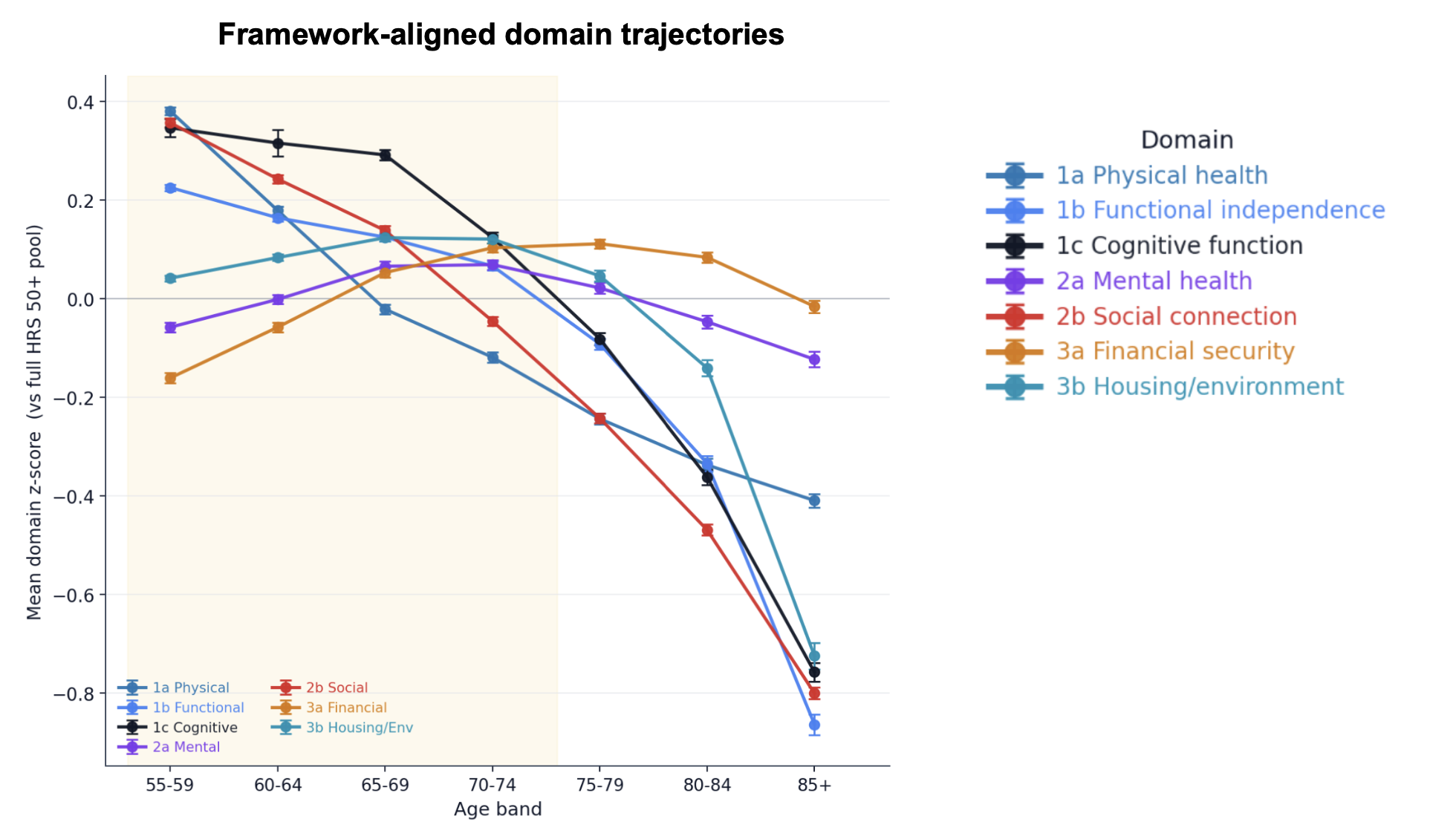
MCiM practicum · Research
The Actionable Decade
Analyzing seven life domains to identify the 55–74 window for earlier support, using the U.S. Health and Retirement Study.
Learn more ›A Stanford-born community on aging, family and technology
Millions of adults care for parents who live hours, or an ocean, away. We bring together researchers, builders and families working on one question: how do we notice when someone we love starts to drift, early enough to help, without making them feel watched?
Many of us are caring across time zones
Right now —
When the weekly call ends here, their day is just starting there. Most of what happens in between, we never see.
The problem
63M
Americans are family caregivers
~6M
live an hour or more away, not counting parents overseas
1 in 2
report financial strain from caregiving
45%
of caregivers over 50 use or want AI health monitoring; only 13% use it today
Sources: AARP & National Alliance for Caregiving, Caregiving in the US 2025; AARP 2026 Tech Trends.
Research, fieldwork, community and gatherings.
MCiM practicum · Research
Analyzing seven life domains to identify the 55–74 window for earlier support, using the U.S. Health and Retirement Study.
Learn more ›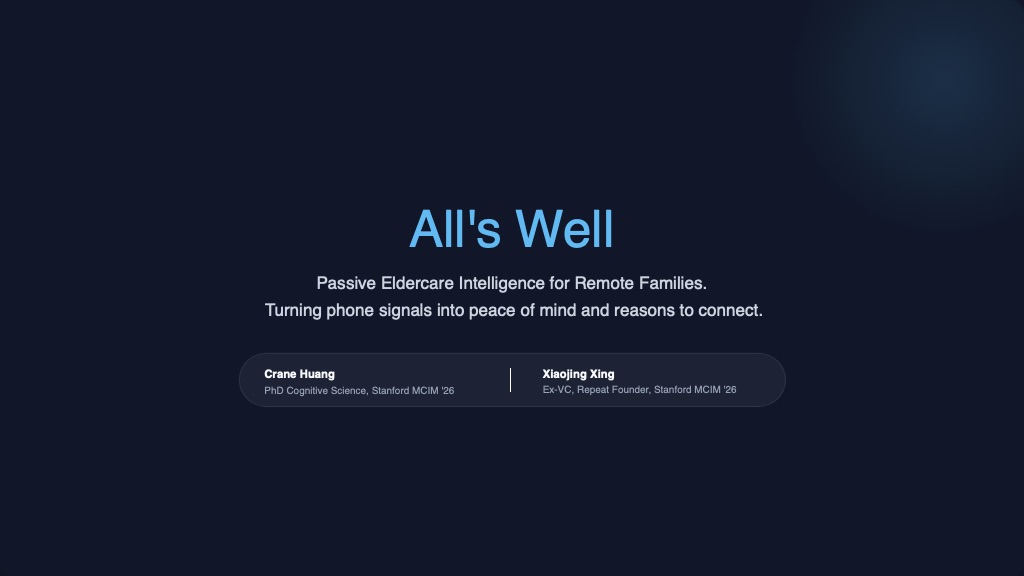
Fellowship · Pitch deck
All’s Well: a pitch developed out of the fellowship, exploring phone signals as a source of reassurance and connection for remote families.
Learn more ›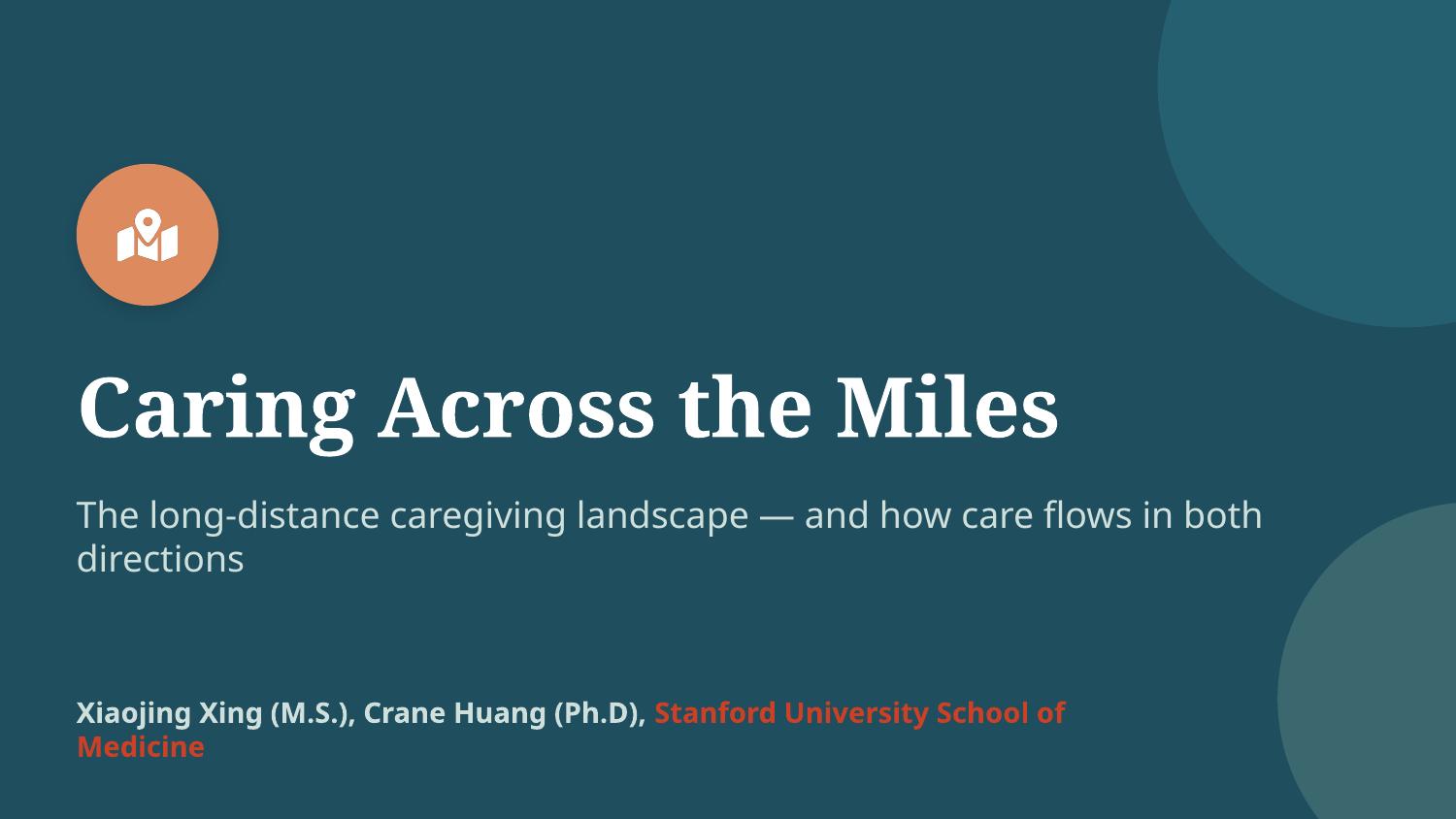
Avenidas · Community talk
A community talk in Palo Alto on the long-distance caregiving landscape — and how care flows in both directions.
Learn more ›
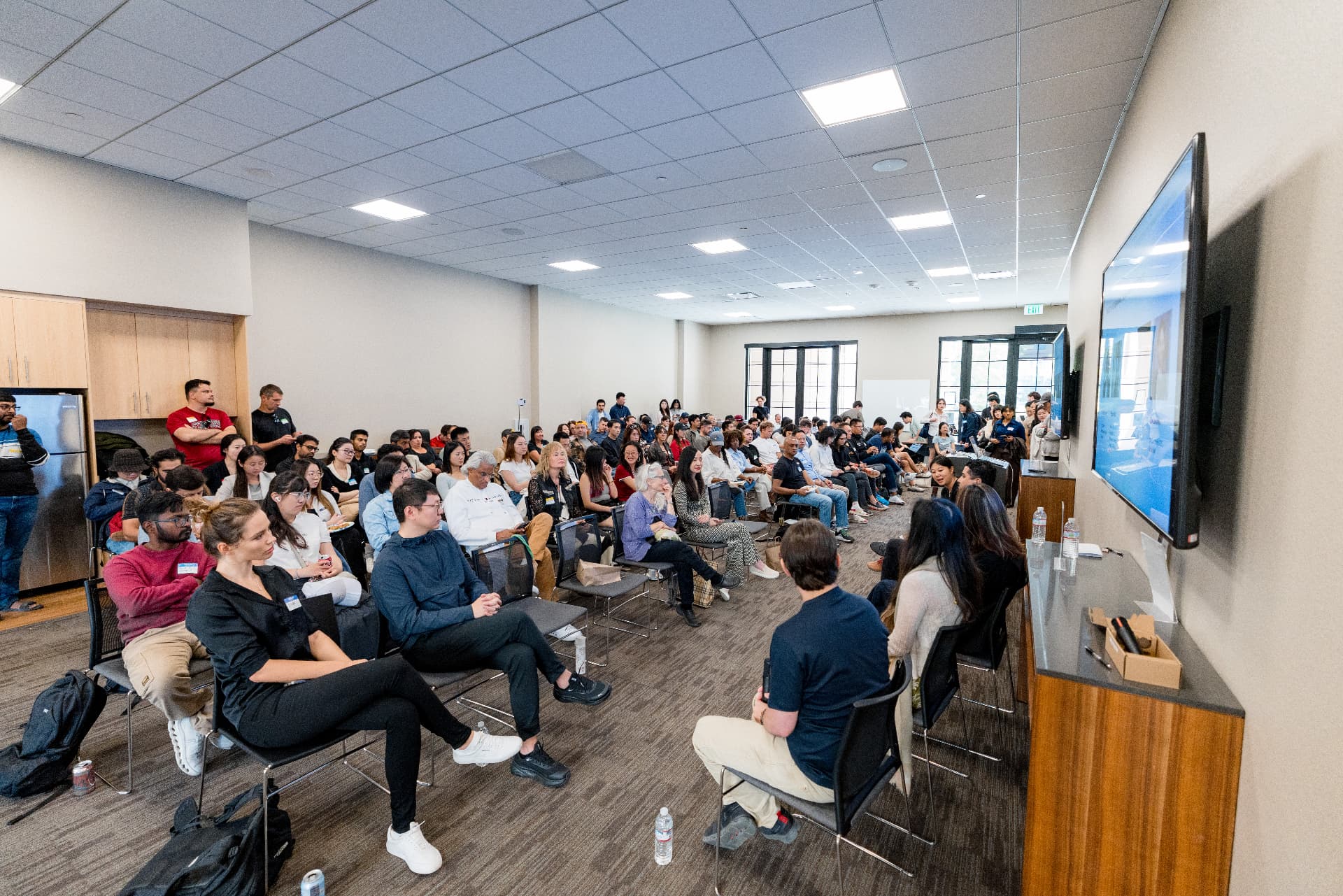
SF Tech Week · Community gathering
Our community's first gathering: two panels and a short talk on AI, sensors, robotics and the future of aging, October 10, 2026.
Learn more ›Data should give families more to talk about, not a reason to talk less.
The meaningful signal is change from a person's own baseline, not the population average.
Older adults decide what is shared. If a parent feels watched, the system has lost the trust it depends on.